
العربية قريبا
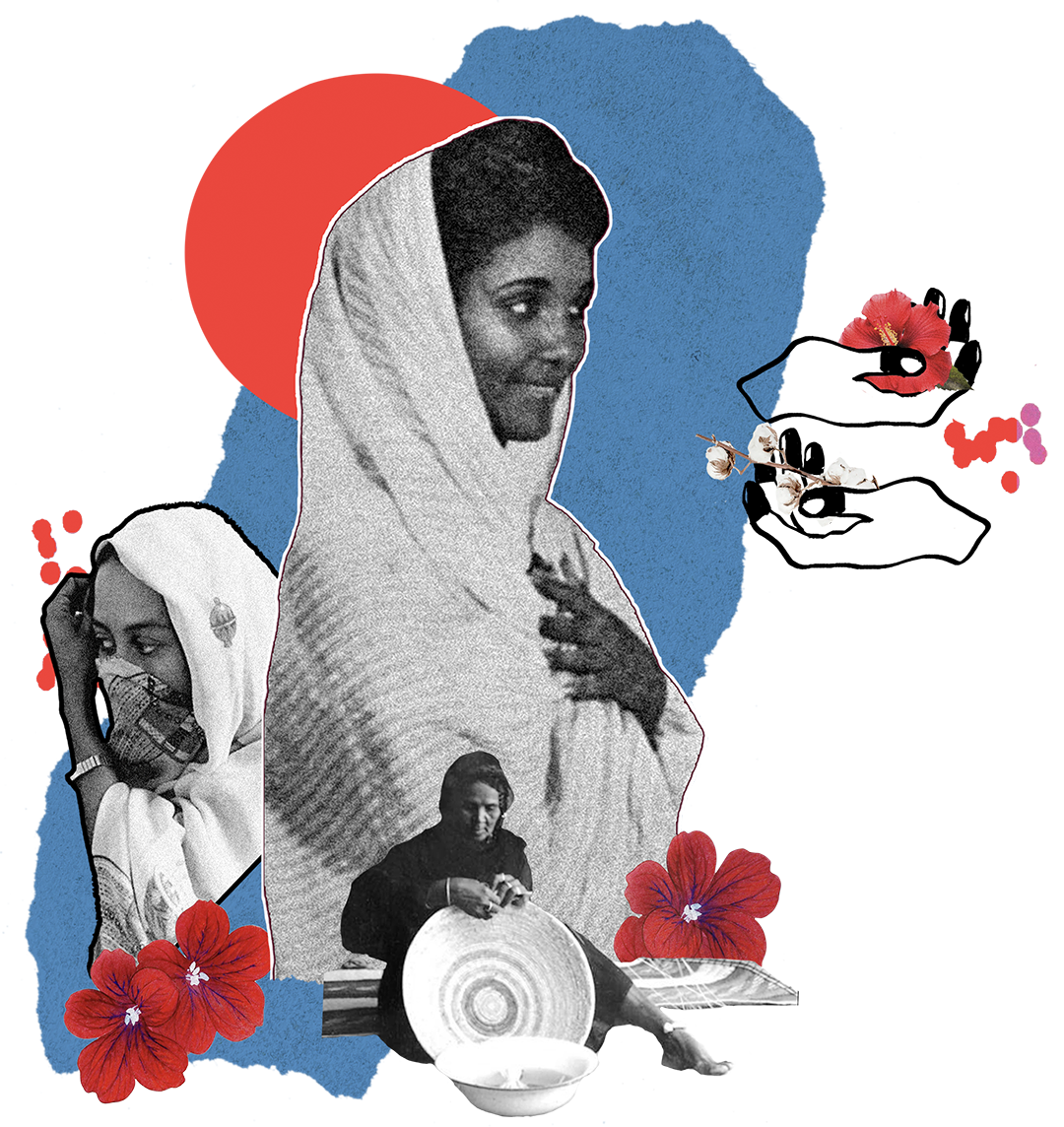
“It feels like we’re in a parallel universe, and whatever we go through [in Sudan] is not part of this world. We, the tortured, killed, displaced, and starved, are too exhausted to go through the homework of making our suffering humane and relatable”.
 — Young Sudanese Activist
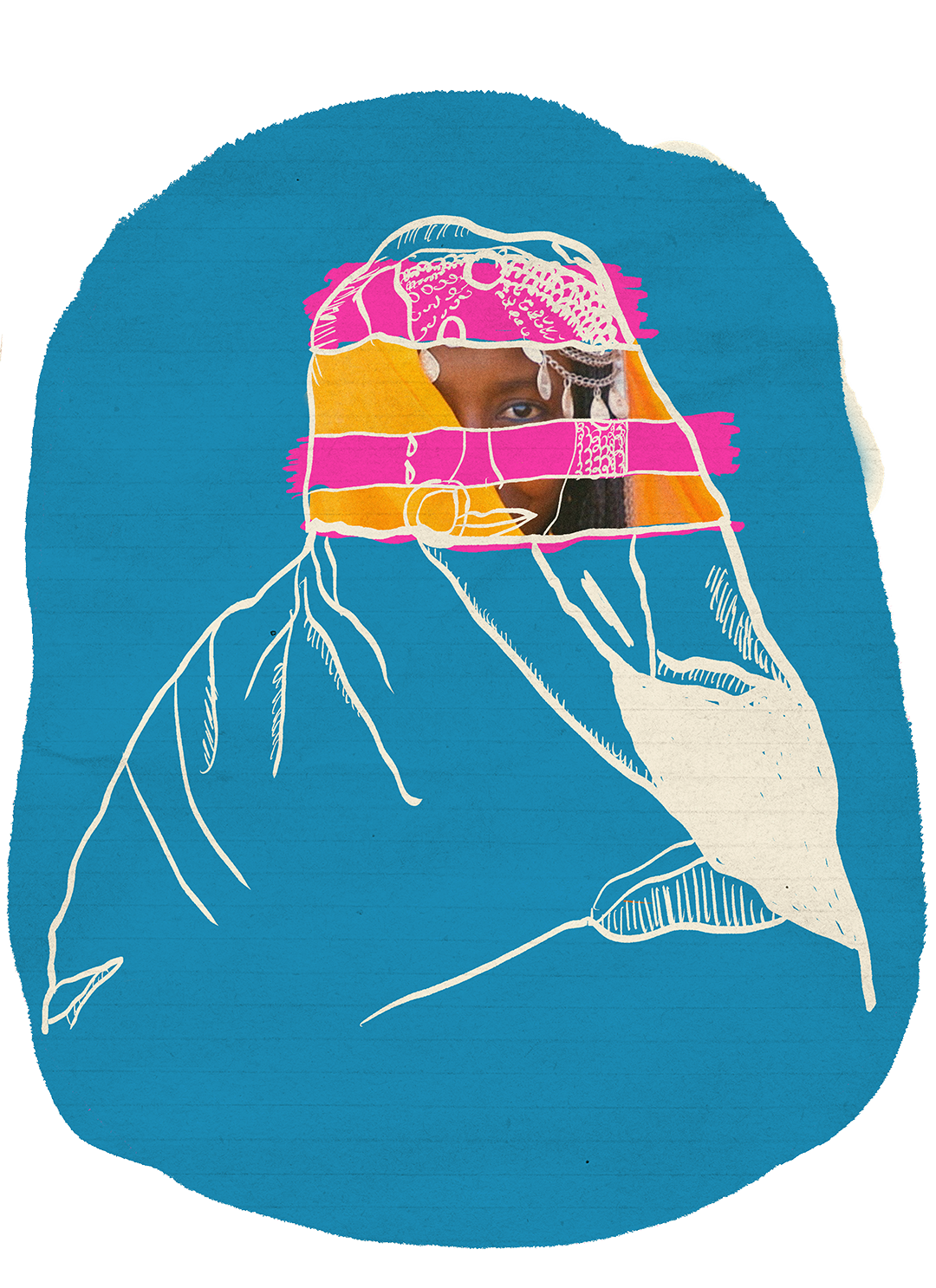
We Are Here narrates a fraction of the lived experiences, resilience and wisdom of eight Sudanese girls and young organisers and activists forcibly displaced within and outside Sudan following the outbreak of war on 15 April 2023.
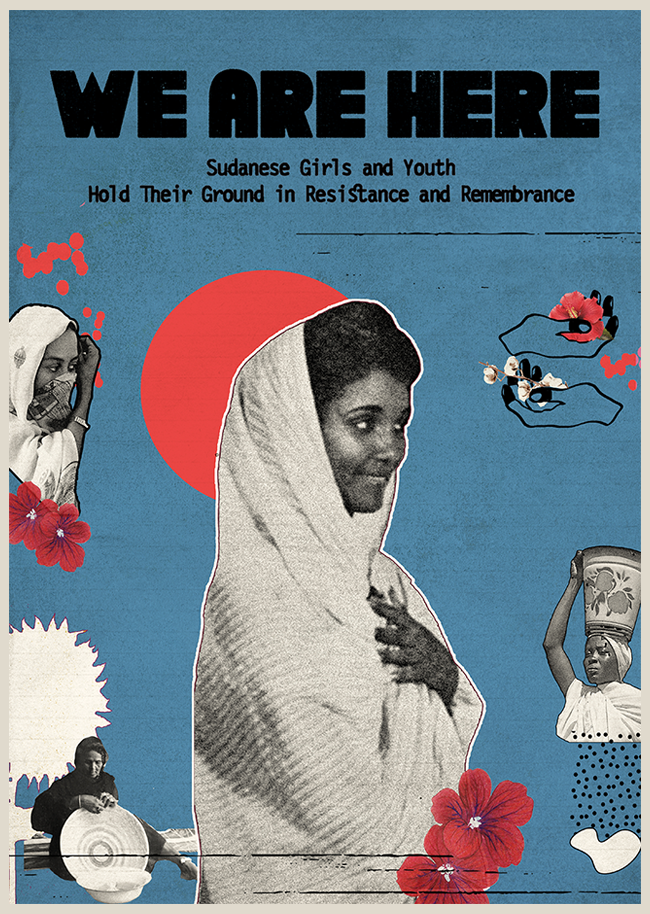
Through intimate testimonies and collective political analysis, the publication connects personalised experiences of war and displacement to the structures that manufacture them. It moves beyond describing what happened to ask why and how these realities emerged, and what they mean for people’s rights to independence and self-determination.
With our movements, for our movements, the work is grounded in a liberatory feminist praxis that sharpens political clarity and recentres Sudanese resistance, memory and liberation projects rather than reducing people to victims of humanitarian crisis.
We Are Here is both tribute and invitation: an ode to Sudanese people refusing erasure from collective memory and struggles for liberation - and an invitation to witness, understand and act with shared political responsibility.
why displacement and storytelling
Displacement in Sudan is not simply an aftermath of war. It is connected to the legacies of colonialism, racial capitalism, imperial expansionism, ethnic cleansing and genocide- systems that continue to treat bodies, lands and resources as sites of extraction and political domination. In this sense, no displacement is voluntary when survival itself has been made impossible.
But displacement cannot be understood through numbers alone. Statistics may communicate the magnitude of a crisis while flattening complex lives, identities, trauma, memory and lost livelihoods into abstract figures.
Storytelling offers another way of knowing. Through oral histories and personal narratives, We Are Here centres people at the heart of analysis, connecting lived experience to the structures of power and oppression that shape it, as well as the intrinsic and expansive spectrum of refusal and resistance.
Stories resist dehumanisation, preserve memory and political meaning, and refuse to confine Sudanese people to a single story of displacement, suffering or humanitarian crisis.
“There is awe in narrating the details of extraordinary conditions so that we can remember the blessed ordinary that war destroys.”
 — Leila Aboulela
Situating the now in its political history
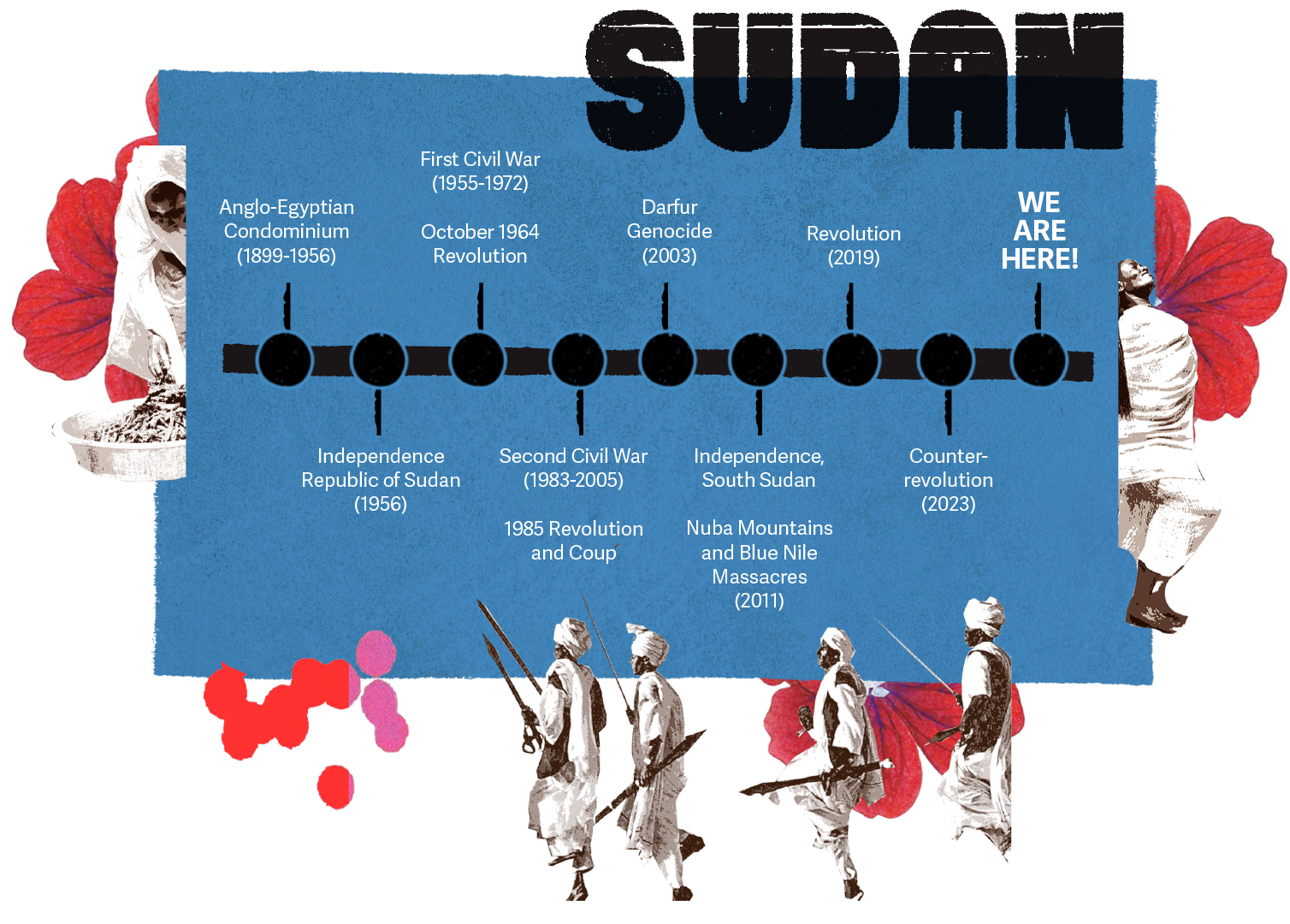
Sudan’s current war cannot be understood outside the political history that produced it.
A history marked by colonial rule, military power, civil wars, genocide, popular revolutions, and repeated struggles for civilian governance.
Explore the carousel below to learn more.

The Spoken Body: Weaving Threads
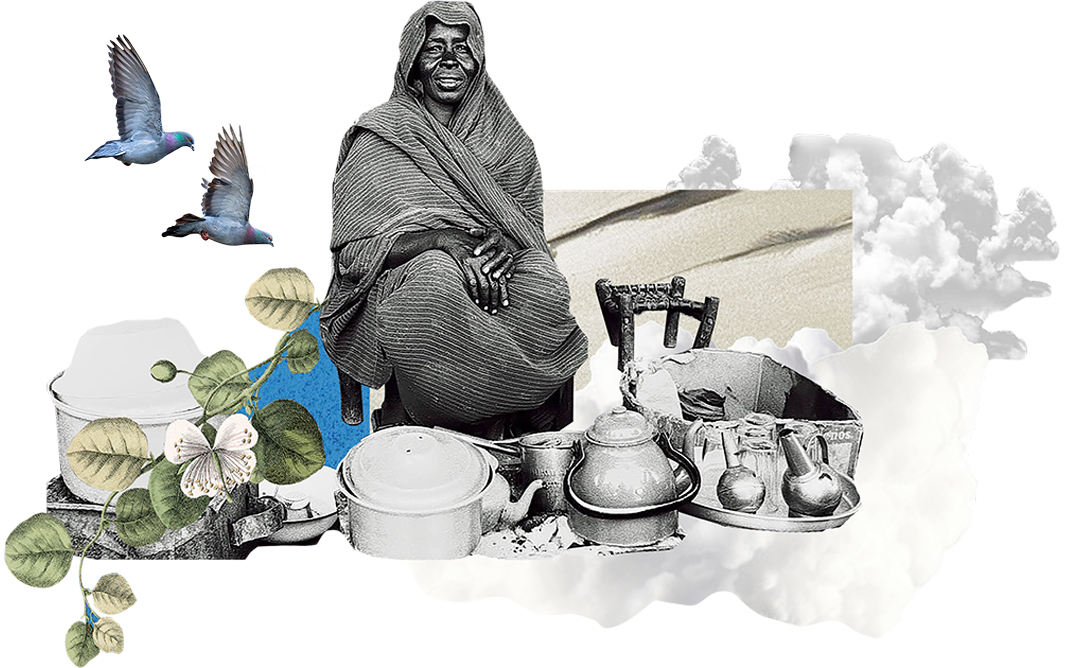
We Are Here moves between lived experience and political analysis to understand displacement beyond its humanitarian framing.
The stories in the publication hold intimate feelings, memories and aspirations that flow from the individual towards the collective, while tracing how displacement shapes social and political identity, collective organising and grassroots resistance.
Across these stories, common threads emerged: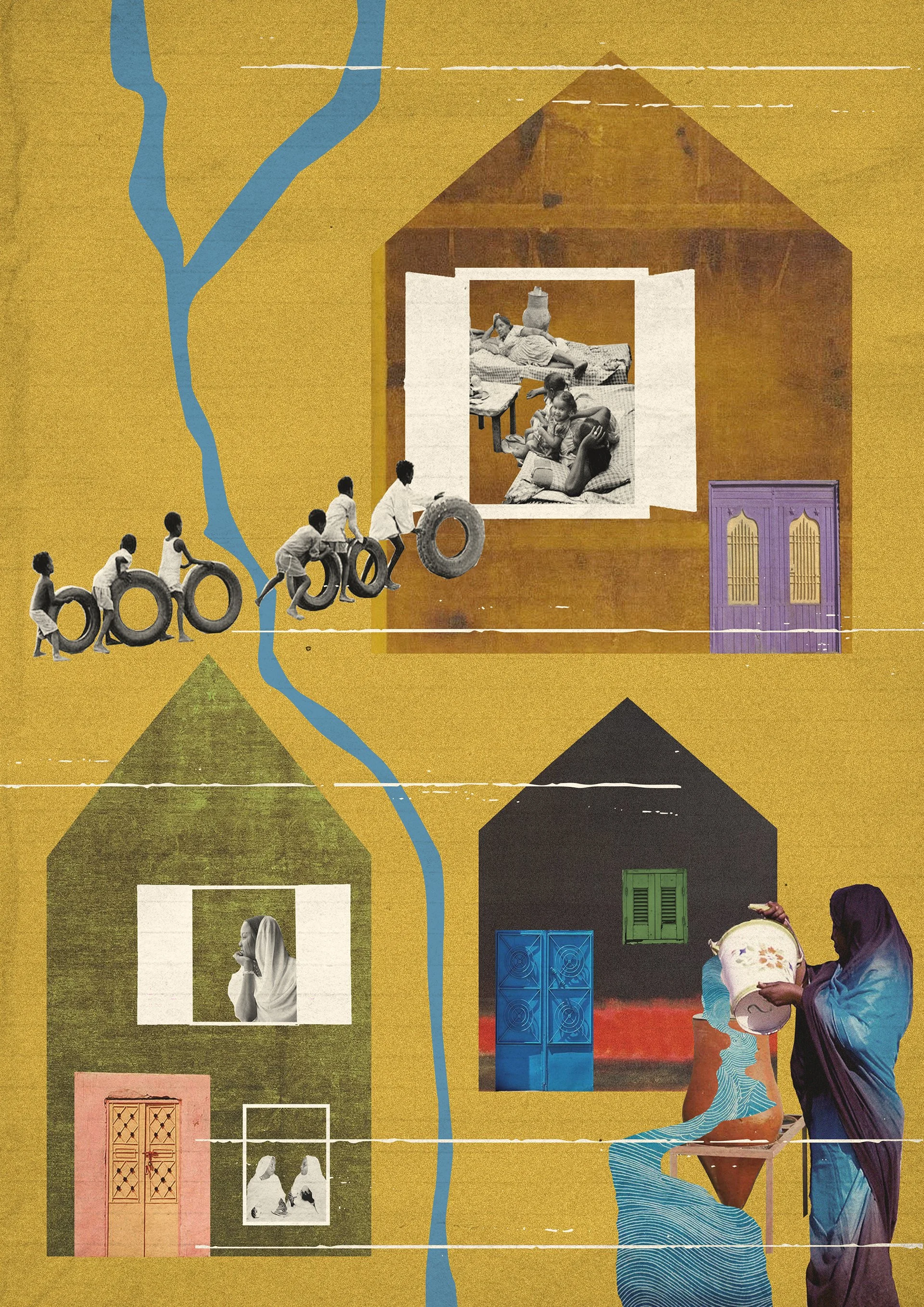
SAFETY AND FEAR
“RSF was positioned in the tall building next to us. Every morning we’ll find cartridge cases falling from RSF firearms and dropping in our garden, and every evening we lived in fear because RSF were very near. We didn’t turn the lights on at night because we didn’t want to get their attention.” – Sudanese Girl ActivistWhile we are, in fact, safe from lethal force, that has long existed before the outbreak of the war in 2023; patterns of implicit violence reverberated in host countries. We have been denied access to basic human rights, equal opportunities, and prospects of a decent life. The systems have been exploiting us and criminalising our presence.
HOME, IDENTITY, AND MEMORY
“We left everything behind; not only clothes and books, but we left a whole life. We left our photo albums and all the unique belongings we inherited from our grandparents. We left our labour, the dreams of many years, the commitments, and the work we fought to build. We left the plants of my mom, the spices of our kitchen. We left our memories.” – ReemAlthough we can still organise for our people and liberation project from outside Sudan, many of us cannot explain how our political identities are somehow primarily nourished from within the homelands.
HIERARCHY IN SUFFERING AND SLOW DEATH
“I am diabetic, and there wasn’t any insulin in the country. We had to leave; there was no other choice. My entire family left to ensure my survival.” – MinaViolence extends beyond direct killing. Displacement, destroyed infrastructure, medical neglect and the loss of the conditions needed to sustain life can trap people in slow death, surviving without the safety, resources and dignity required for a thriving life.
SEXUAL VIOLENCE AS COLLECTIVE PUNISHMENT
“I remember that a week before the decision to leave was made, a woman in my neighbourhood had been sexually assaulted, and another was kidnapped. Our house was next in order based on the pattern the armed forces used. This is when we decided to leave.” – Sudanese Young ActivistSexual violence is not a random result of war settings nor isolated episodic incidents, but as calculated and pivotal as military warfare to humiliate and annihilate an ethnic population.
RETURN
“On the border from Sudan to Egypt, I had this thought of probably never being able to return to Sudan. And this felt so real. Once I stepped the borders, I realised how real it is that I’m actually leaving Sudan, and entering a foreign country, and my future is unknown. I’m entering a new reality that I don’t have the tools to navigate.” – Aya ElzeinReturn is not a mere reversal of exile. It is not simply about returning to a material residential unit, but about returning to the possibility of a liberated, democratic and decolonised Sudan.
TRAUMA AND POLITICAL HOPE
“We had no water or electricity, and we needed to maintain a spirit of community and gatherings to survive the difficult moments.” – Sudanese Girl ActivistTrauma is carried in bodies, memories and generations. Yet political hope is not an abstract promise that everything will simply return to normal. It is sustained through community, collective care, political organising and the refusal to allow violence to determine the limits of what can still be imagined and built.
THE REFUGEE SYSTEM IS RACIST AND COLONIAL
“My brother couldn’t come either because he didn’t have a visa at that time. Egypt allowed women and men over 50 to enter without a visa, so that was me, my mom, my sister and my aunt.” – ElafAcross different experiences of displacement, the publication reaches a clear conclusion: the refugee system is not built to protect the displaced. Mobility becomes a privilege rather than a right.

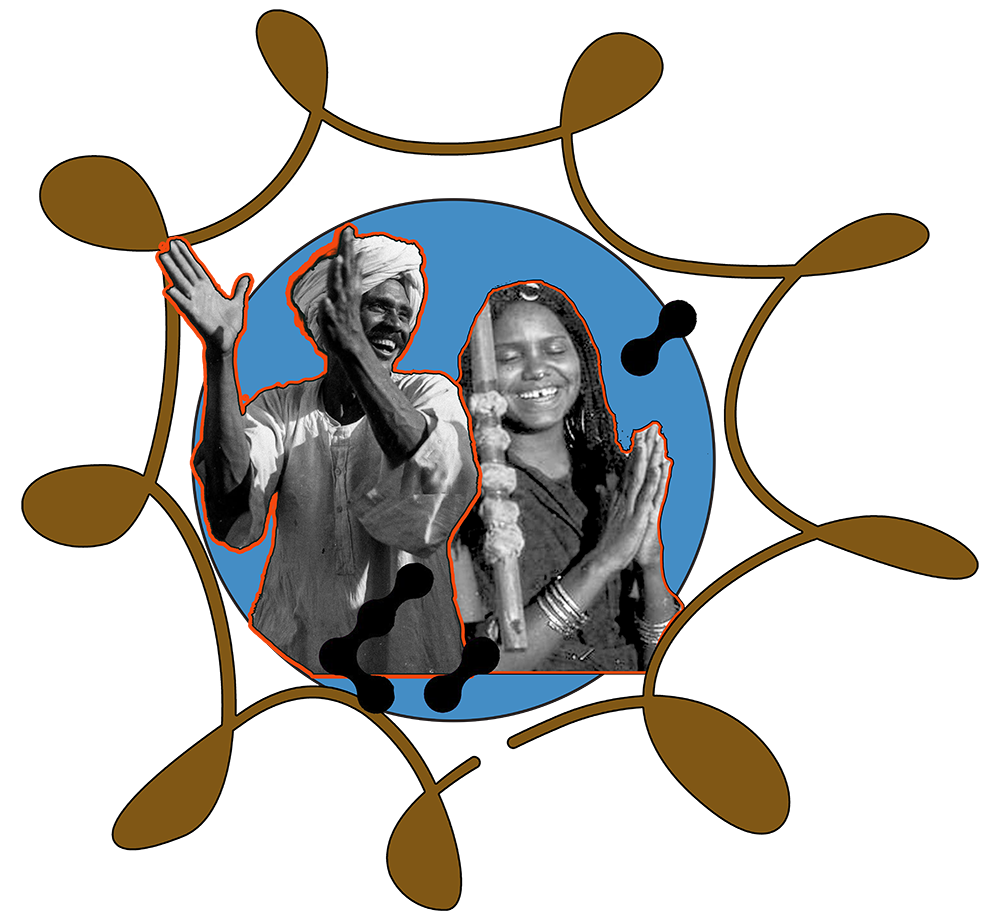
OUR STRUGGLES ARE LOCAL, BUT THE ENEMY IS SHARED
Our struggles are connected because the systems of dominance, exploitation and extraction are connected.
Political feminist solidarity means translating this analysis into action: centring frontline and historically marginalised leadership, moving resources with dignity and at the speed of trust and political solidarity, challenging imperial influence, and building collective power through shared responsibility, accountability, reciprocal care and respect.
Read more in We Are Here about the political forces shaping the war in Sudan and what anti-imperialist solidarity can look like in practice.